
Book Recommendation: The Massasoit House and Paramount Theater
The Massasoit House and Paramount Theater is the latest in the Springfield Republican’s pictorial histories of the Valley, and it illustrates the fascinating timeline of a building which has had a double life as both a hotel and a theater. Starting as the Massasoit House, it opened its doors in June 1843 to accommodate railway travelers stopping in Springfield as they journeyed on the recently constructed railroads. In the days before trains were equipped with dining cars, they stopped at railway stations to allow travelers time to disembark for a meal, and depending on the hour, lodging for the night. Springfield‘s railway station was a particularly busy spot because it was the intersection of New England’s railway lines running north and south and east to west. The Massasoit House, owned and managed by the Chapin family, was in a prime location next to the station. It became one of the nation’s premier hotels in the nineteenth century and it was renowned for its fine food, recruiting its chefs from Boston and New York.

The book is illustrated with interior and exterior photos of the hotel, and offers up a selection of hotel menus. The Wood Museum Archives has its hotel guest registers, and they read like a People Magazine of nineteenth century notables. Over the decades guests included Daniel Webster, Charles Dickens, P. T. Barnum, Mary Todd Lincoln, Swedish singer Jenny Lind, Frederick Douglass and President Franklin Pierce. Theodore Roosevelt spent part of his honeymoon at the Massasoit hotel with his bride, Alice Hathaway, in 1880. The photos of many of these celebrity guests are included in the book.
While the reputation of the hotel focused on providing the best food and lodging in Springfield, behind the scenes in its early days it functioned as a stop on a different kind of railroad – the Underground Railroad – whose passengers were African American slaves fleeing to freedom in the North. Ethan and Marvin Chapin hid and housed escaping slaves in their hotel or in nearby accommodations, including property owned by Abolitionist John Brown, who they befriended and funded.
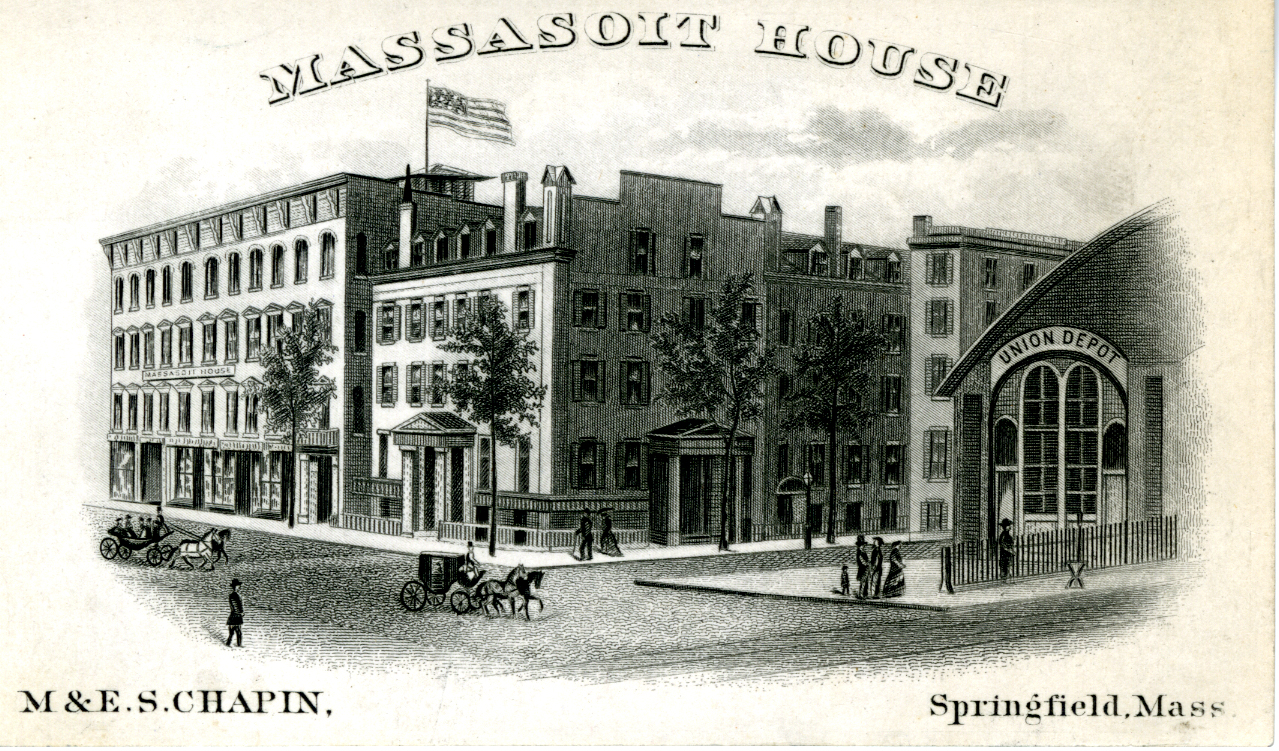
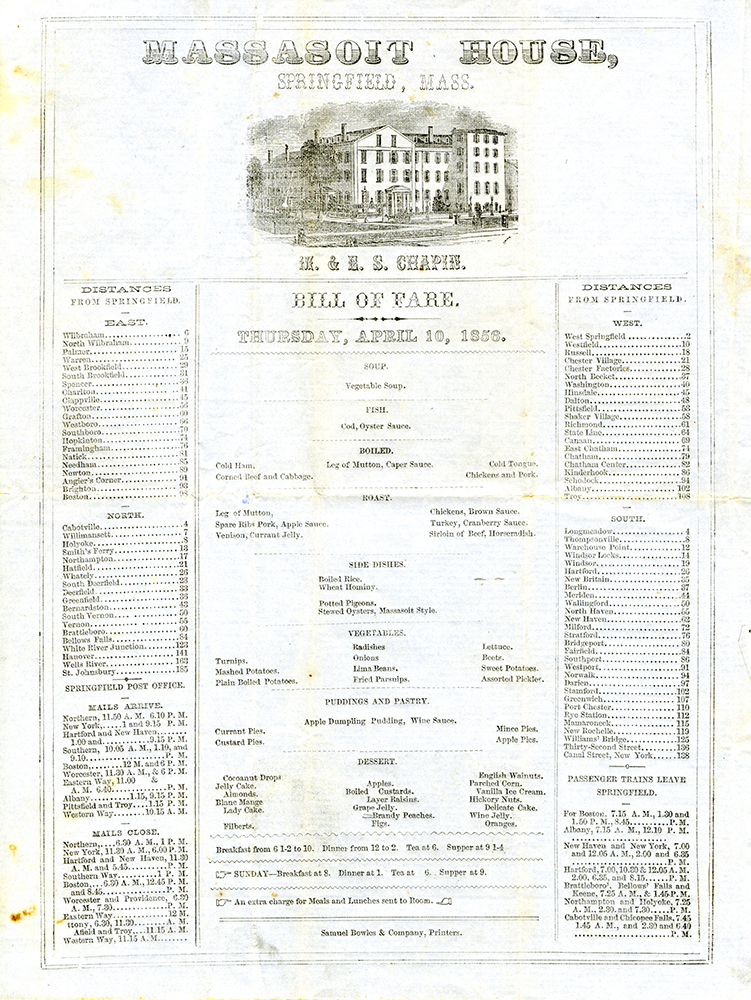
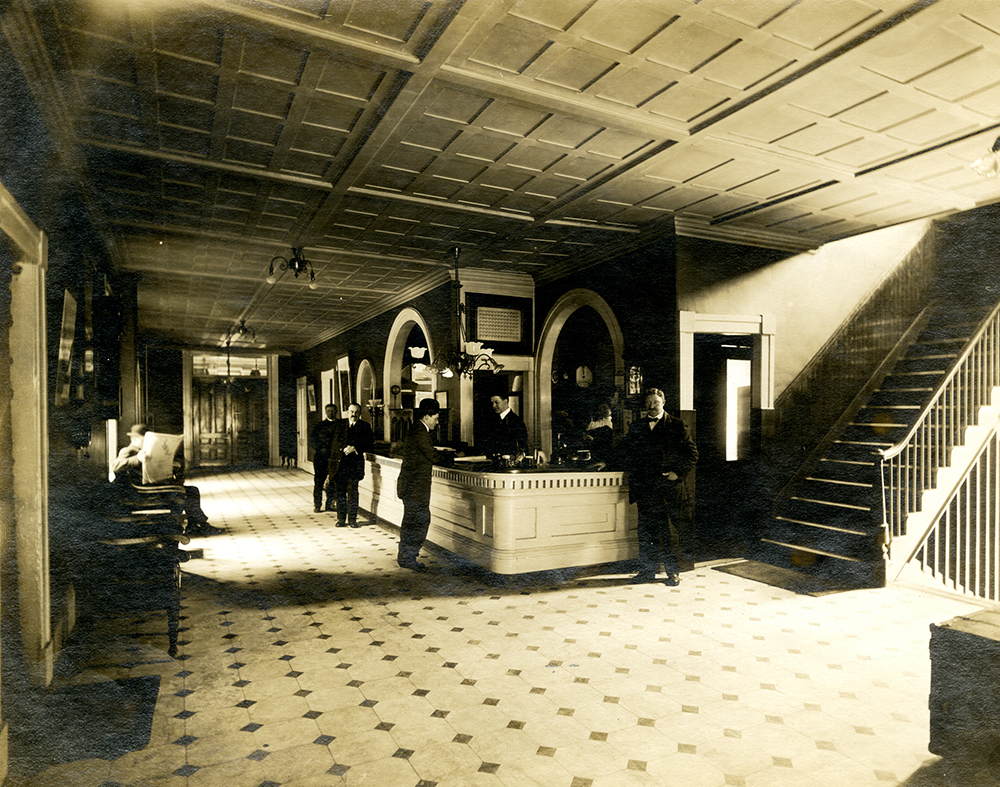
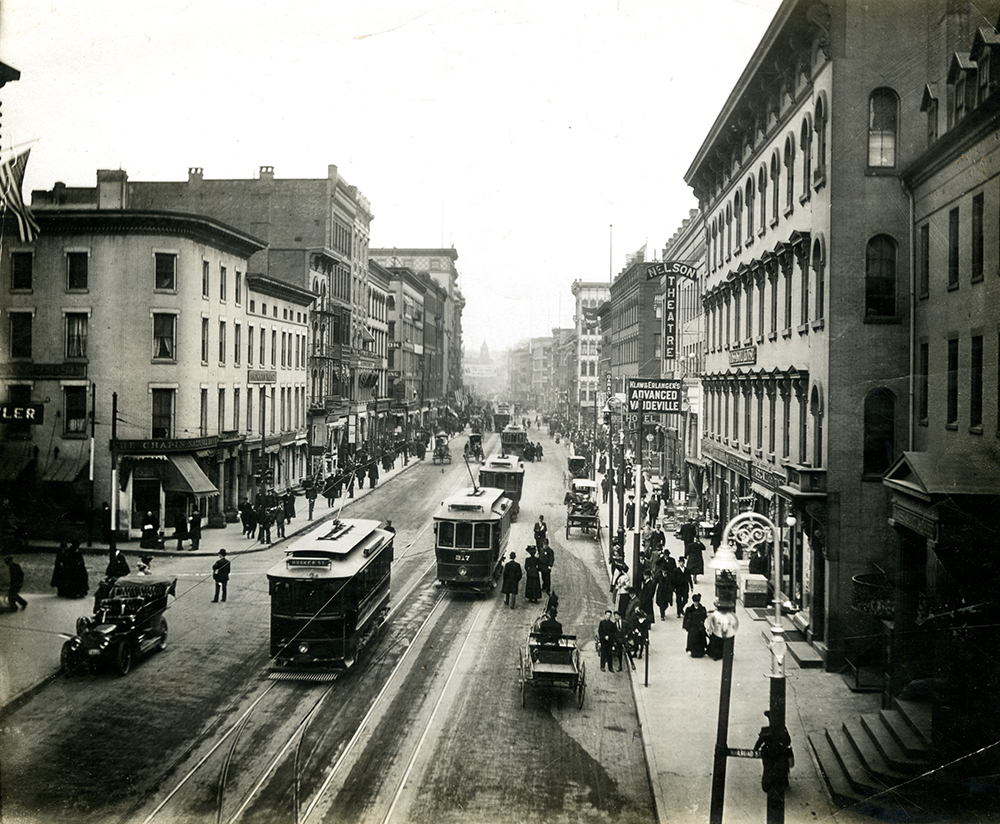
As the twentieth century dawned, the Chapin family recognized that increasing competition was taking its toll on the vintage hotel. It was sold in 1912 and in 1913 received a new façade. In 1929 the old hotel was absorbed into the new Paramount Theater, at that time the largest real estate deal in Springfield’s history. Its Wurlitzer organ entertained a capacity crowd of 3,200 people and the theater was equipped with state-of-the-art everything, including air conditioning. For the next decade, it held vaudeville shows and big band concerts, but from 1939 to 1958 it operated solely as a movie theater. Beginning with the 1960s concerts and Broadway productions were held during the following decades of the Paramount’s bumpy existence. The book provides an excellent timeline of the theater’s stop-and-start history, through its years as the Julia Sanderson Theater and the Hippodrome. There is a selection of interior and exterior theater photos and a great assortment of event and concert posters and programs from this era, and fans and performers have a chance to reminisce in the chapter called Remembrances of Paramount Early Years. A final chapter looks at its future.
We’re pleased that the book draws heavily on the archives of the library in the Wood Museum, which collects materials related to the history of Springfield. It features many of our photos, menus, advertisements, post cards, posters, tickets, programs, and other ephemera. For students of history, or folks who attended events at the theater, this is a wonderful book that provides a great look-back at one of the city’s most iconic buildings.
Maggie Humberston is the Head of Library & Archives at the Wood Museum of Springfield History.

Related Posts