Lowell R. Bayles and the “Spirit of Springfield”
Lowell R. Bayles was a nationally celebrated pilot who flew Springfield’s famous Gee Bee racing planes to victory during that period in the 1920s and 1930s hailed as the Golden Age of Aviation. Born in 1900 in Mason, Illinois, he began his career as a mining engineer, while taking flying lessons from a former WWI military pilot. He learned to fly a Curtiss JN-4 Jenny, a biplane used by the U. S. Military during WWI. After the War, these planes could be purchased at a fraction of their original cost as the U.S. Government sold off its post-war inventory of surplus biplanes. A Curtiss Jenny could be purchased for a few hundred dollars, and Bayles, like many others smitten with the dream of flying, bought his first plane this way.
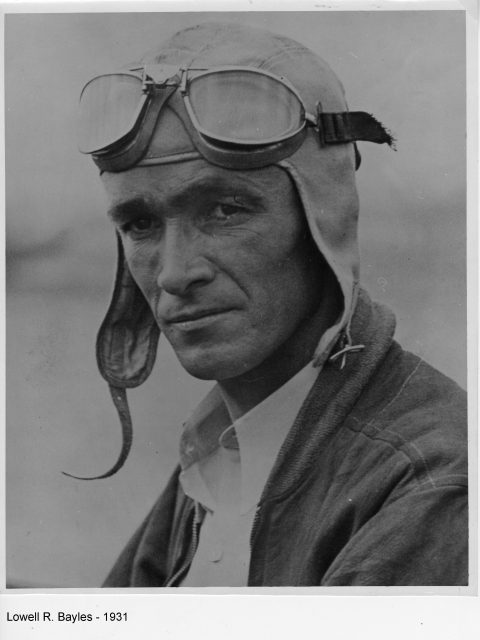
Bayles’s enthusiasm for flying soon overshadowed his interest in a mining career and he began barn-storming across the country in the 1920s. Barnstorming was a phenomenon of that era that involved stunt flying demonstrations by daredevil pilots. Barnstormers customarily flew into a small town, negotiated with a local farmer for a field to use as a runway, and performed aerial stunts to thrill the crowds that gathered. Pilots also augmented their incomes by selling short airplane rides to the public for a few dollars a trip.
In 1928 Lowell Bayles partnered with Hartford native Roscoe Brinton and started a flying service in Springfield, Massachusetts. A year later, in July 1929, airplane designer and mechanic Zantford Granville negotiated a deal with the Tait family of Springfield to manufacture his Gee Bee airplanes at a hangar at the Springfield Airport, which was owned by the Taits. Granville moved his operation from Boston, along with his four brothers, leaving the city where he had designed and built his Gee Bee (Gee Bee for G.B. -the initials of the Granville Brothers) Model A, recognized as the first aircraft built in Boston. It was a biplane with innovative features. During that time Lowell Bayles became acquainted with the Granville brothers.
The crash of the stock market in October 1929 was inauspicious timing for the fledgling aviation firm known as Granville Brothers Aircraft Inc. and only eight Gee Bee Model A planes were sold. The Granville brothers decided to try their hands at designing an aircraft to compete for the prestige and prize money available on the aviation racing circuit. They hired gifted engineer Bob Hall. In 1930, their Model X monoplane, piloted by Lowell Bayles, won second place in the Cirrus Engine Company’s All American Flying Derby. The derby, which was the world’s longest air race at the time, was a trip of approximately 5,500 miles. Its route took pilots in a circuit from Michigan to Texas, and then to California, before returning to Michigan.
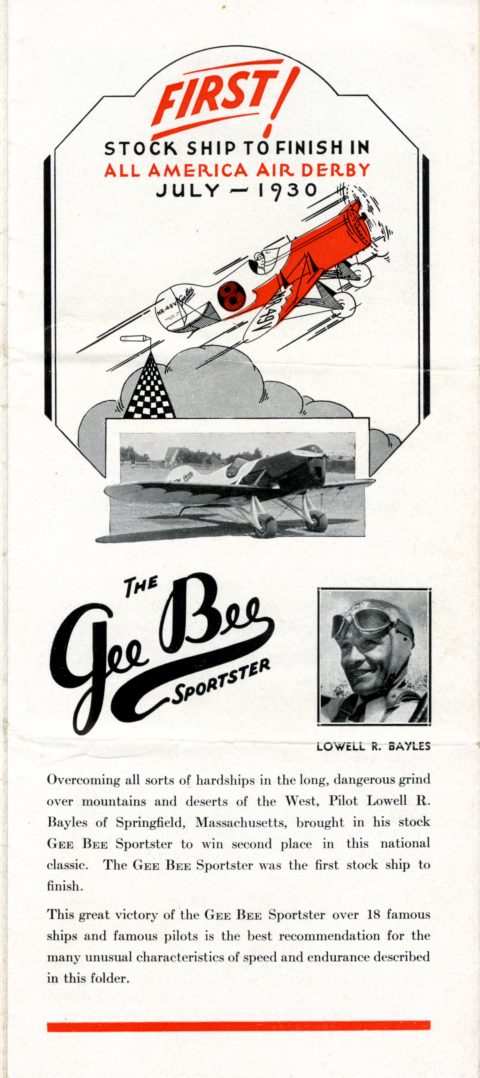
The next aircraft the Granvilles built was the Model Y Senior Sportster. Although they originally designed the Model Y for use as a private plane, it competed well on the racing circuit. Given that the Depression had decimated the commercial aviation market, the Granvilles now turned all their attention to producing racing planes.
Their next project was to build a racing plane to compete in the prestigious National Air Races held in Cleveland in 1931. This popular event attracted the world’s best aviators who flew the most innovative aircraft. It was also the location of the premier closed-course air race in the world. The Granvilles didn’t have the finances to manufacture their design, but they did have the enthusiastic support of the people of Springfield. Their lack of capital was soon addressed by the formation of The Springfield Air Racing Association (S.A.R.A.), a group of local investors who sold shares of $100 to raise the $5,550 needed to construct the plane and cover its entry fees and expenses. Stock certificates, personally delivered to their purchasers by Zantford Granville or engineer Bob Hall, raised $5,200, an amazing amount of money during the Depression. Pilot Lowell Bayles personally bought $500 of shares in exchange for the opportunity to pilot the plane in Cleveland!
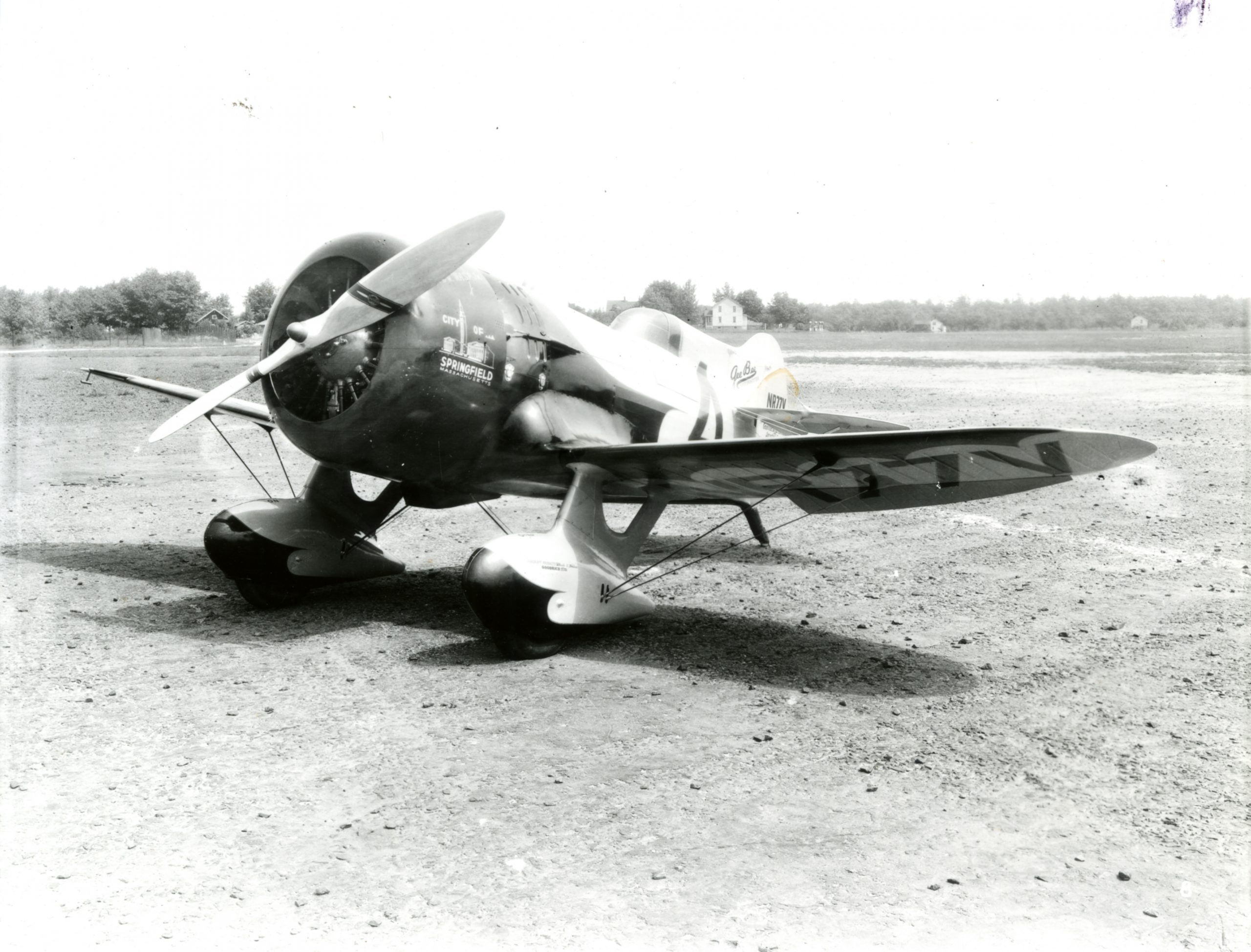
On June 23, 1931, the Granvilles began work on their yellow and black Model Z Super Sportster “City of Springfield” designed specifically to compete in that fall’s Thompson Trophy race. Named for Cleveland manufacturer Charles Thompson, head of the Thompson Aeronautical Corporation, the race was added to the roster of events held at the National Air Races in 1929.
It was a closed course event flown over an area about 10 miles long with 50-foot-high pylons marking the turns. Pilots flew at high speeds in close proximity to each other. Because the race was flown at low altitudes and around a closed course, the crowds in the grandstands could easily see much of the spectacle. The Thompson Trophy Race was the climactic final event of each year’s National Air Races meeting.
The “Spirit of Springfield” was constructed at the Springfield Airport in less than five weeks at a cost of just under $5,000. With a Pratt & Whitney Wasp Jr. engine incorporated into the smallest possible airframe, the plane was fast but tricky to fly. Engineer Bob Hall tested it at the Bowles Airport in Agawam and was pleased with its results. The “City of Springfield” was christened with a bottle of ginger ale, this being the height of Prohibition, and cheered by a crowd of 5,000 fans. The trip to Cleveland was on!
At the 1931 National Air Races in Cleveland, the Model Z plane exceeded everyone’s expectations when both Bayles and Hall piloted Model Z’s to win five first place trophies. Maude Tait, the daughter of one of the brothers who had originally loaned money to the Granvilles, also flew a Gee Bee to victory at the same meet, winning the Cleveland Pneumatic Aero Trophy Race for Women in a Model Y.
On September 7, 1931, Lowell Bayles piloted the “City of Springfield” to victory, winning the coveted Thompson Trophy in the 100-mile race, and beating out his closest contender, Jimmy Doolittle, whose plane succumbed to engine trouble. Bayles posted a landplane speed record of 236.2 miles per hour. As he was getting ready to make an attempt at a new world’s speed record for land planes at the National Air Races, word came that two of his young mechanics, Nelson Lundgren and Harry Jones Jr., who had helped to build the “City of Springfield,” had been badly injured in a motorcycle accident on their way home to Springfield. Bayles gave no thought to forgoing the speed trial and left immediately to fly back to Springfield. He returned with a Ford Tri-Motor passenger plane, converted into an air ambulance, to personally fly them home for surgery at the Shriners Hospital. Both young men survived their injuries, given the expert care they received in Springfield. On September 10th, Bayles and his fellow flyers Bob Hall, Maude Tait and Zantford Granville were feted by a large crowd of 5,000 at the Springfield Airport, followed by a parade in the city. The festive evening was capped off with fireworks. All who invested in the cost of building the Gee Bee #4 by buying stock certificates received their money back from the $7,500 prize money won by Bayles.
Unfortunately, the fame and luck Bayles enjoyed at the National Air Races in Cleveland was short-lived. Several months later, on December 5, 1931, Bayles was killed in a fiery crash at the Wayne County Airport in Detroit as he attempted to establish a new world speed record in the Gee Bee #4 Model Z which had been refitted with a bigger Wasp engine, allowing it to fly at speeds of over 280 miles per hour. After completing 4 laps at a speed of 284.72 mph it was discovered that a timing device had failed and the speed record couldn’t be officially credited to Bayles by the Aeronautical Federation. He went up again and the flight proved disastrous. It is believed that the gas cap came off in flight and hit Bayles in the face, probably knocking him unconscious. He lost control of the plane, which pitched upward, causing the right wing to fold. The plane spun uncontrollably, crashed and exploded on impact. Due to the efforts of Springfield friend and fellow flyer Maude Tait, Bayles was awarded the new American Land Plane speed record posthumously in January 1932.
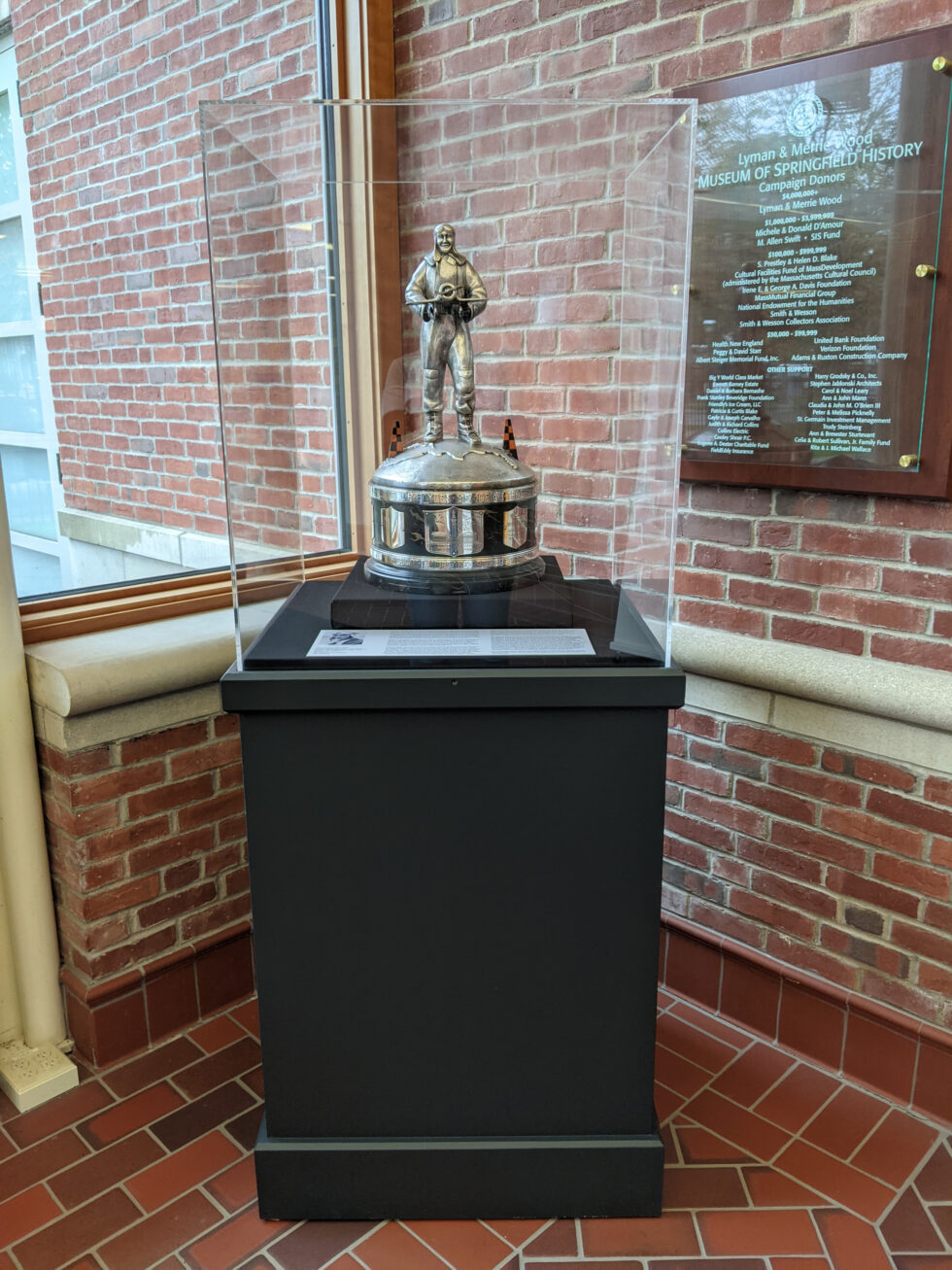
This devastating news left the people of Springfield looking for a way to honor the memory of Lowell Bayles and his contributions to aviation. A grief-stricken Zantford Granville proposed that a trophy be designed and awarded at the National Air Races to subsequent holders of the American speed record for landplanes. This idea met with the approval of James Tait, president of the Springfield Air Racing Association, which sponsored Bayles’ record-setting attempts, and from the Springfield chapter of the National Aeronautic Association. Funds were raised in the city and the silver trophy, designed by local sculptor Philip LaPalme, was commissioned from the Gorham Manufacturing Company in Providence, Rhode Island. The Lowell Bayles Memorial Trophy was awarded at the National Air Races in Cleveland to Jimmy Doolittle in 1932. Doolittle also won the Thompson Trophy race that year in a Gee Bee R-1.
The Granville Brothers Aircraft Corporation was in business from 1929-1934. The company designed some of the most innovative racing planes in aviation history and experimented with some of the most advanced aerodynamic theories of the day. Unlike most airplanes of the period, the Gee Bees’ wingspans were noticeably wider than the length of their fuselages, giving them their unique stubby appearance. Only the most skilled pilots could fly them, but racing was a thrill-seeking and dangerous sport. The death of Lowell Bayles in 1931, followed by the loss of pilot Russell Boardman in 1933 when his Gee Bee R-1 crashed on takeoff in Indianapolis, began to give the Gee Bees a tainted reputation and they are still considered controversial today. Were they “killer planes” or just ahead of their time?
Written by Maggie Humberston, Curator of Library and Archives at the Springfield Museums.

Related Posts