Sawmill worker James Wilson Marshall (1810-1885) could not have predicted the frenzy that followed his 1848 discovery of gold flakes in California’s Sutter Creek. By the start of 1850, the area’s non-native population had increased by 500% as hopeful prospectors traveled from across the country for their own chance to strike it rich. This population explosion brought new buildings, neighborhoods and tourism to the recently established state of California.
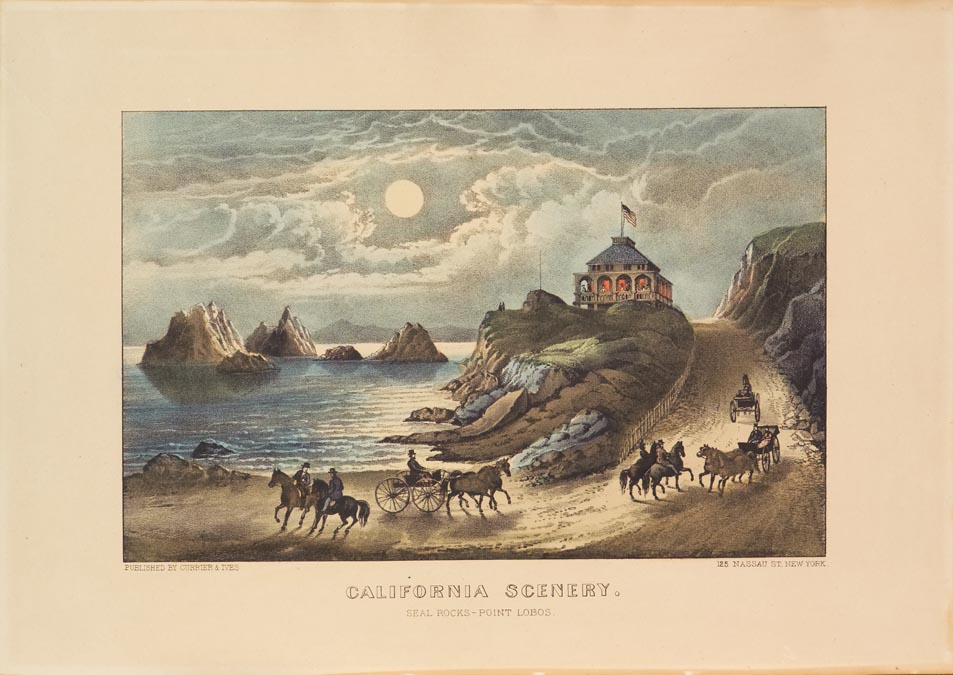
Depicted in this print is a coastal portion of San Francisco known as Lands End, a popular destination for wealthy tourists who arrived after the Gold Rush. The original Cliff House resort, shown here, was built in 1863 and could be accessed by horse-drawn stagecoach via Point Lobos Avenue. This moonlit image highlights the beauty of the scenery where an outcropping of land provided panoramic views of Seal Rocks and the Pacific Ocean. Many renovations and owners later, the Cliff House still operates as a restaurant, advertising, “all day dining with striking ocean views.”