Presentations will take place via the video conferencing app ZOOM. Please register in advance in order to access the program.
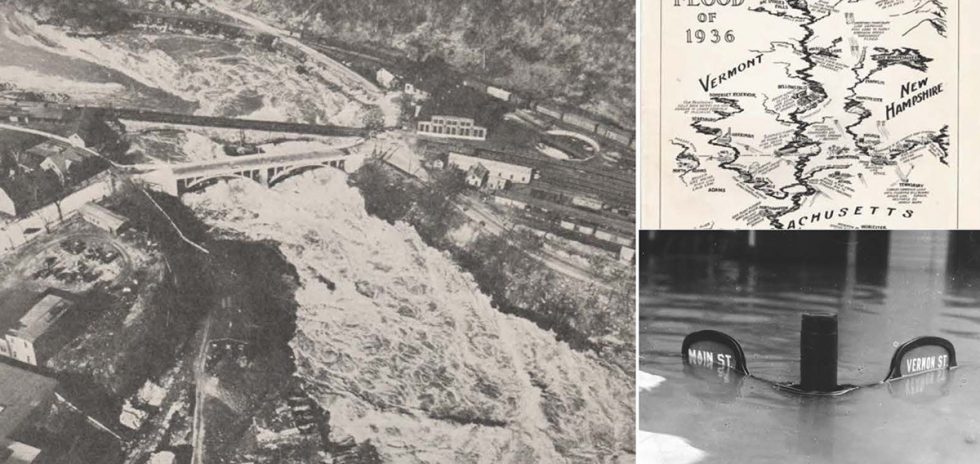
In the beginning of the twentieth century, the Connecticut River Valley was a thriving manufacturing hub for fabric, arms and brass. But early in the spring of 1936, nearly two feet of rain created havoc on a massive scale, killing more than one hundred people and leaving tens of thousands homeless, unemployed and without power for weeks. Patrols were conducted in rowboats on city streets. Typhoid and other public health issues complicated recovery efforts. Adjusted for today’s standard, damage estimates exceeded $9 billion, and the flood helped launch FDR’s Flood Control Act of 1936. Dams, reservoirs and dikes were constructed to control future flooding. Much of that system now remains in place but has gone largely unmaintained.
Presented by Josh Shanley, firefighter-paramedic and author