Fashion and Function: The Art of Netsuke Carving
What do dance masks, tiny figurines, and the animals of the zodiac have in common? Each of these subjects inspired the intricate carving of netsuke!
Typically measuring less than three inches high, netsuke are small, wearable sculptures that were fashionable during Japan’s Edo Period (1615-1837). Expertly crafted, these miniature accessories became highly collectable among American enthusiasts in the late 19th century. Approximately 150 examples of netsuke acquired by Springfield residents George Walter Vincent Smith and Belle Townsley Smith are housed in the George Walter Vincent Smith Art Museum.
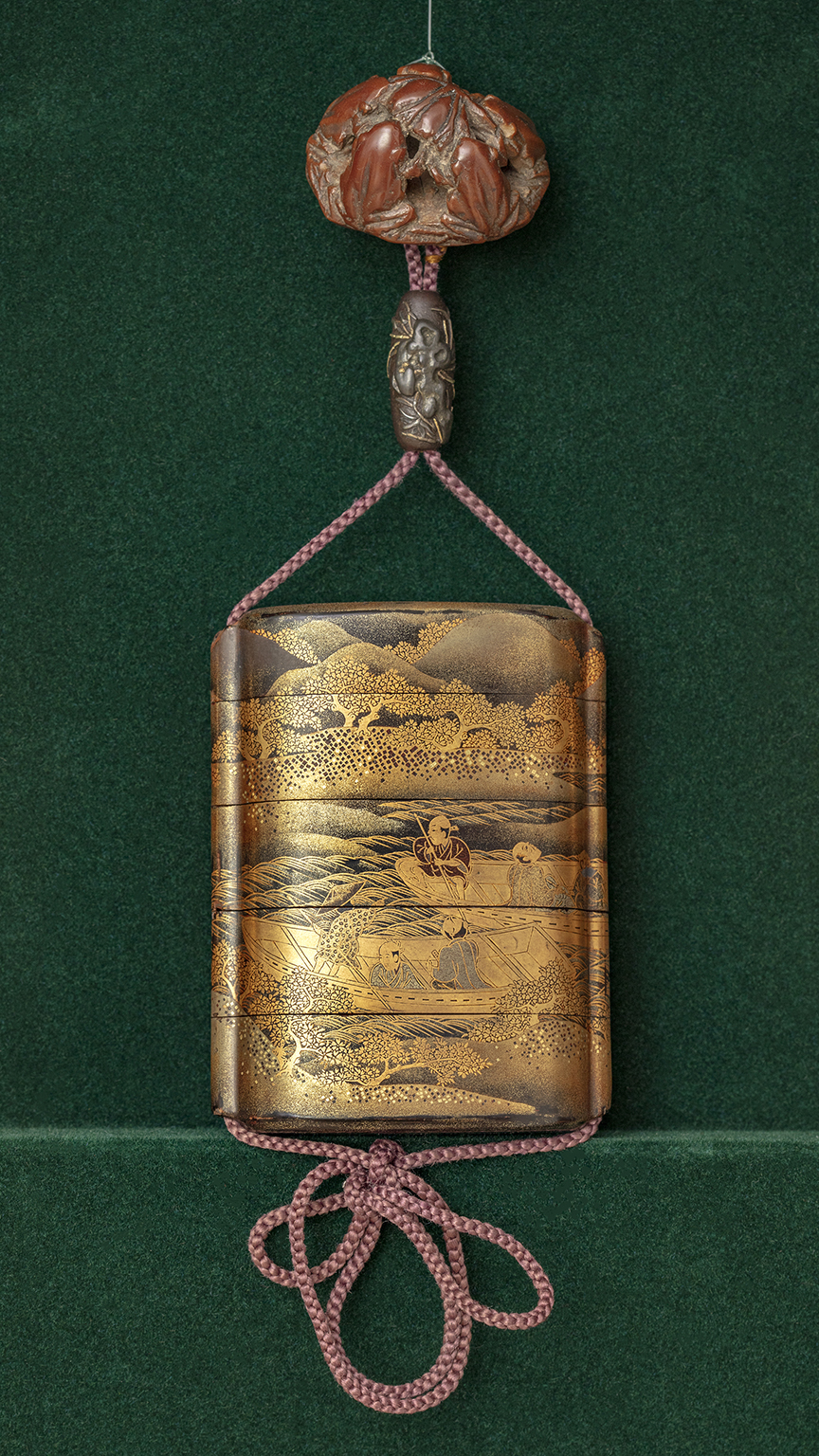
Functioning much like toggles or counterweights, netsuke were attached to purse-like boxes called inrō that could be suspended from a sash wrapped around one’s kimono. Featuring an inrō and netsuke connected by a cord and bead, or ojime, the photo at the right shows a complete carrying case. In order to open the delicate stacked boxes of the inrō, the owner of this case would slide the ojime towards the netsuke. The boxes could then be separated, revealing contents such as medicine, tobacco, or small writing materials.
Much like today’s most luxurious accessories, these carrying cases were more than functional: they also signaled a wearer’s affluence and taste. Although Edo Period sumptuary laws placed restrictions on ostentatious clothing, the laws did not extend to carrying cases or netsuke. The accessories became sites of uncensored creativity for makers and could be used to express wealth and the personality of wearers. Merchants, who often had more money, but ranked lower in Japan’s social hierarchy, expressed their financial power by carrying highly decorative netsuke, ojime and inrō.
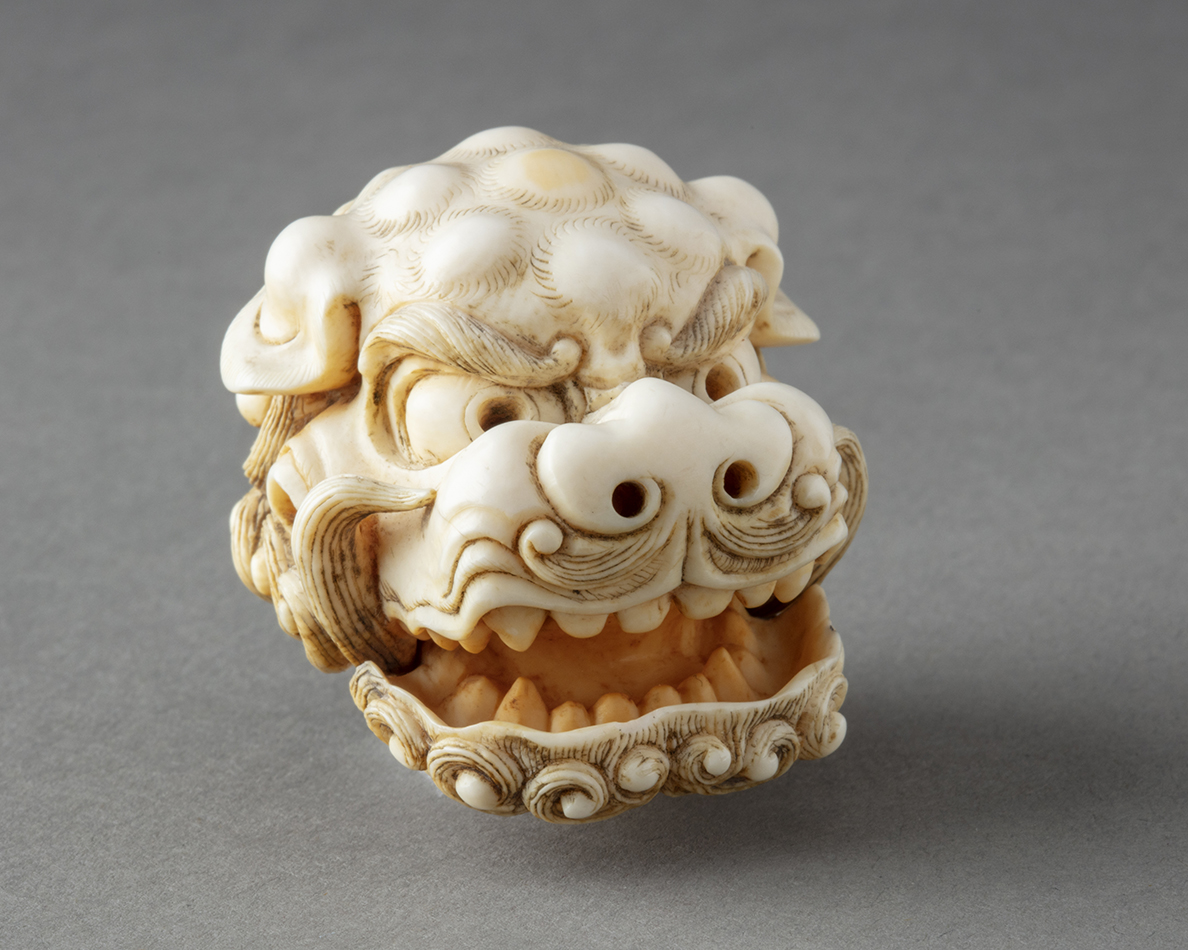
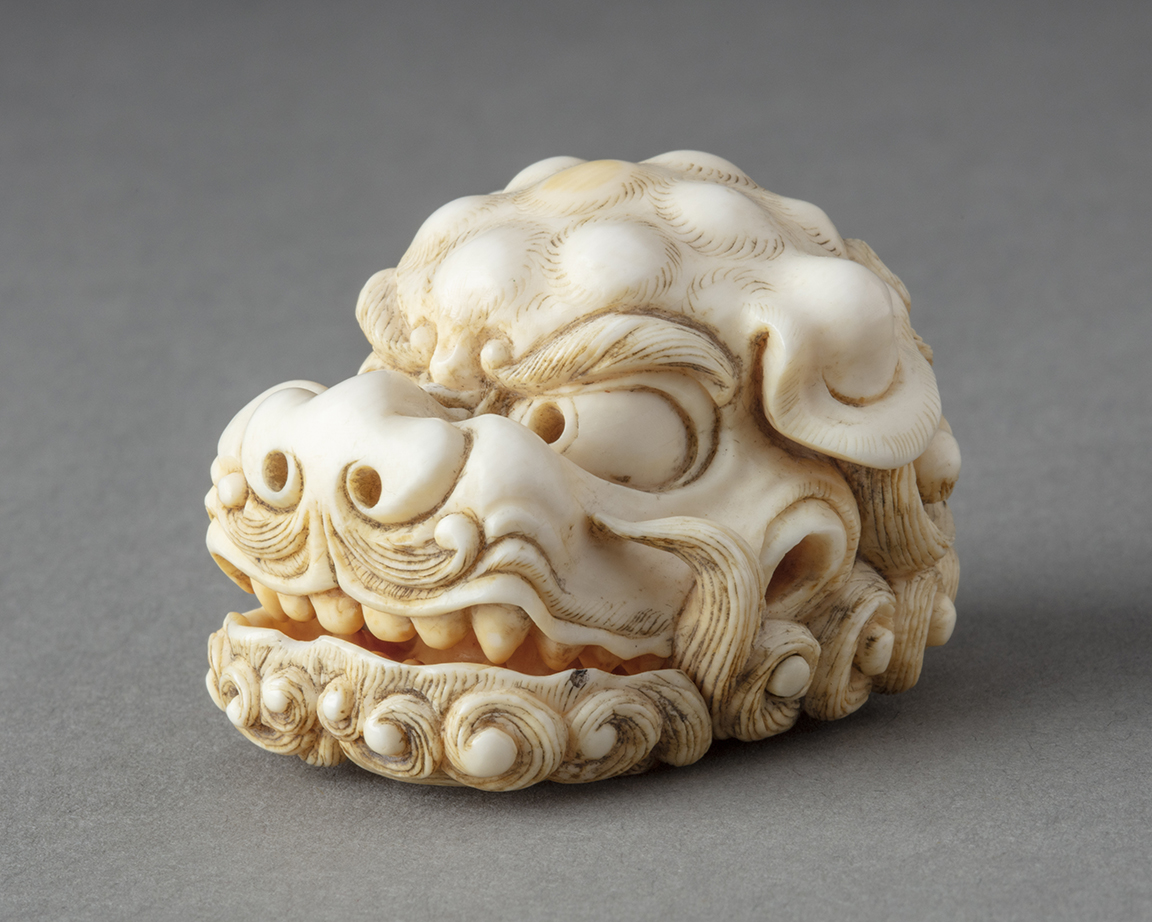
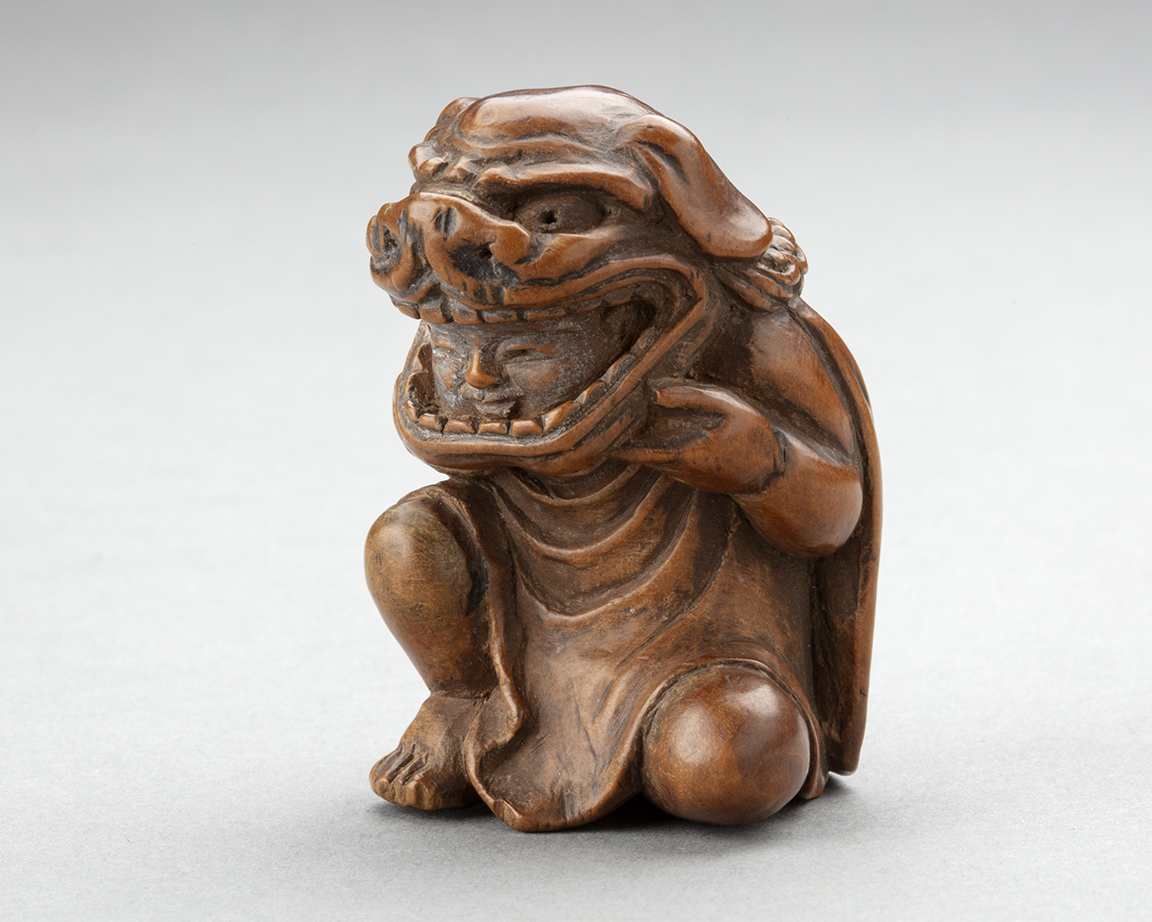
The finest netsuke are elaborately carved on all sides and made of wood, bone, or porcelain. Some display signatures, indicating that the craftsman who created these objects took pride in their work. One signed netsuke, on display in the Japanese Decorative Arts Gallery at the George Walter Vincent Smith Art Museum, takes the form of a shishi (lion) head with dramatic, deeply set pupils and nostrils as well as etched lines around the eyes and mouth that mimic fur. Attributed to Izumiya Tomotada, one of the most prominent carvers of the late 18th and early 19th centuries, this detailed netsuke also includes an articulated jaw. When opened, the hinged jaw reveals large teeth and a curling tongue. Similarly shaped shishi heads with open mouths were worn as masks for the Lion Dance or Shishi Mai. Traditionally performed during the Chinese New Year celebration, the Shishi Mai also has manifestations in some Japanese Buddhist processions. A boxwood netsuke in the George Walter Vincent Smith Art Museum’s collection illustrates this ritual by showing a boy wearing a shishi mask.
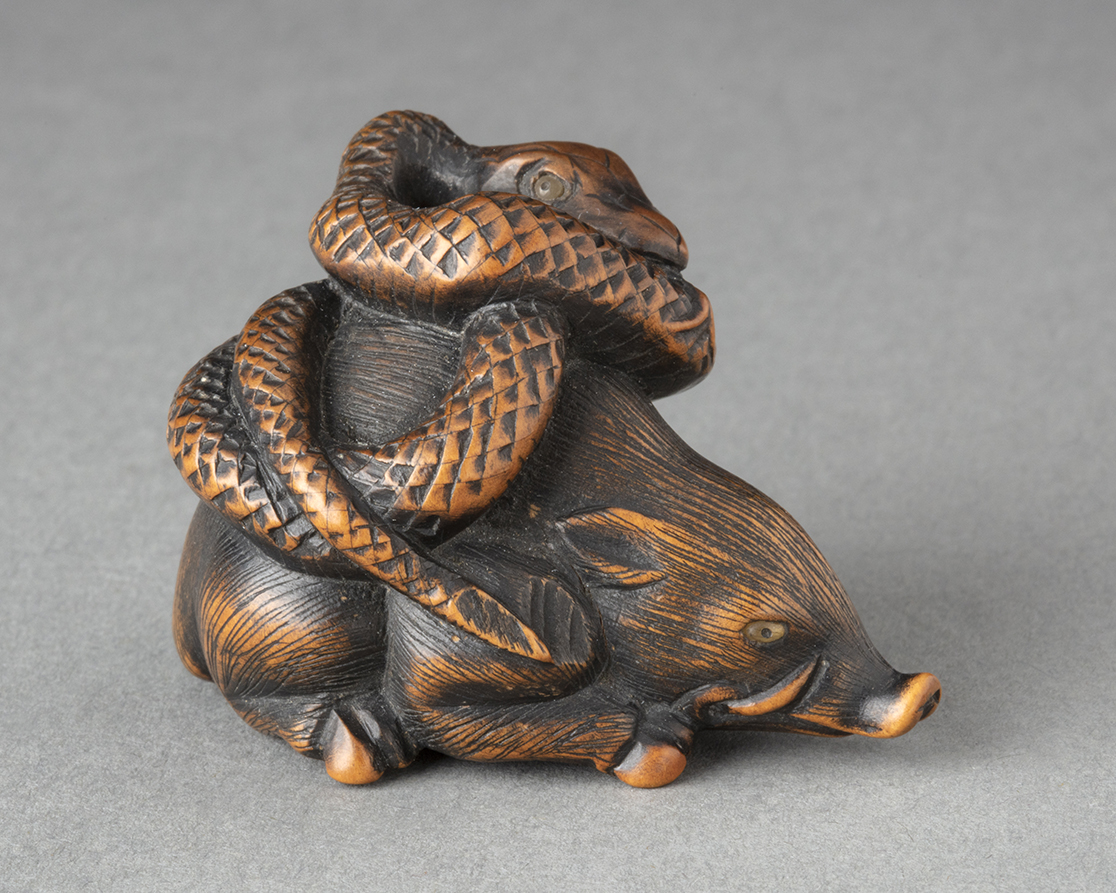
Although netsuke are only occasionally articulated, they can always be appreciated from various viewing angles. An additional netsuke, also on display at the George Walter Vincent Smith Art Museum, depicts a boar with a snake on its back, bringing together two zodiac symbols. Although unsigned, this netsuke was created by a talented artisan who took care to render the feet, belly, and chin of the boar which can be seen when the piece is turned upside-down. Also visible on the bottom of this netsuke are two openings through which a cord could be threaded. Boars, found in the wild in western Japan, were thought to possess reckless courage, while snakes were associated with power, anger, or jealousy. The interesting grouping of these two animals brings together their attributes and offers a zodiacal combination of the 9th and 12th hours.


The netsuke pictured in this blog post represent a very small selection of the extensive holdings at the George Walter Vincent Smith Art Museum. Each unique, hand-carved netsuke contains a visual surprise. We invite you to explore these works, and many other examples of intricate netsuke on display on the 2nd floor of the George Walter Vincent Smith Art Museum.
 Maggie North is the Curator of Art at the Springfield Museums.

Related Posts