
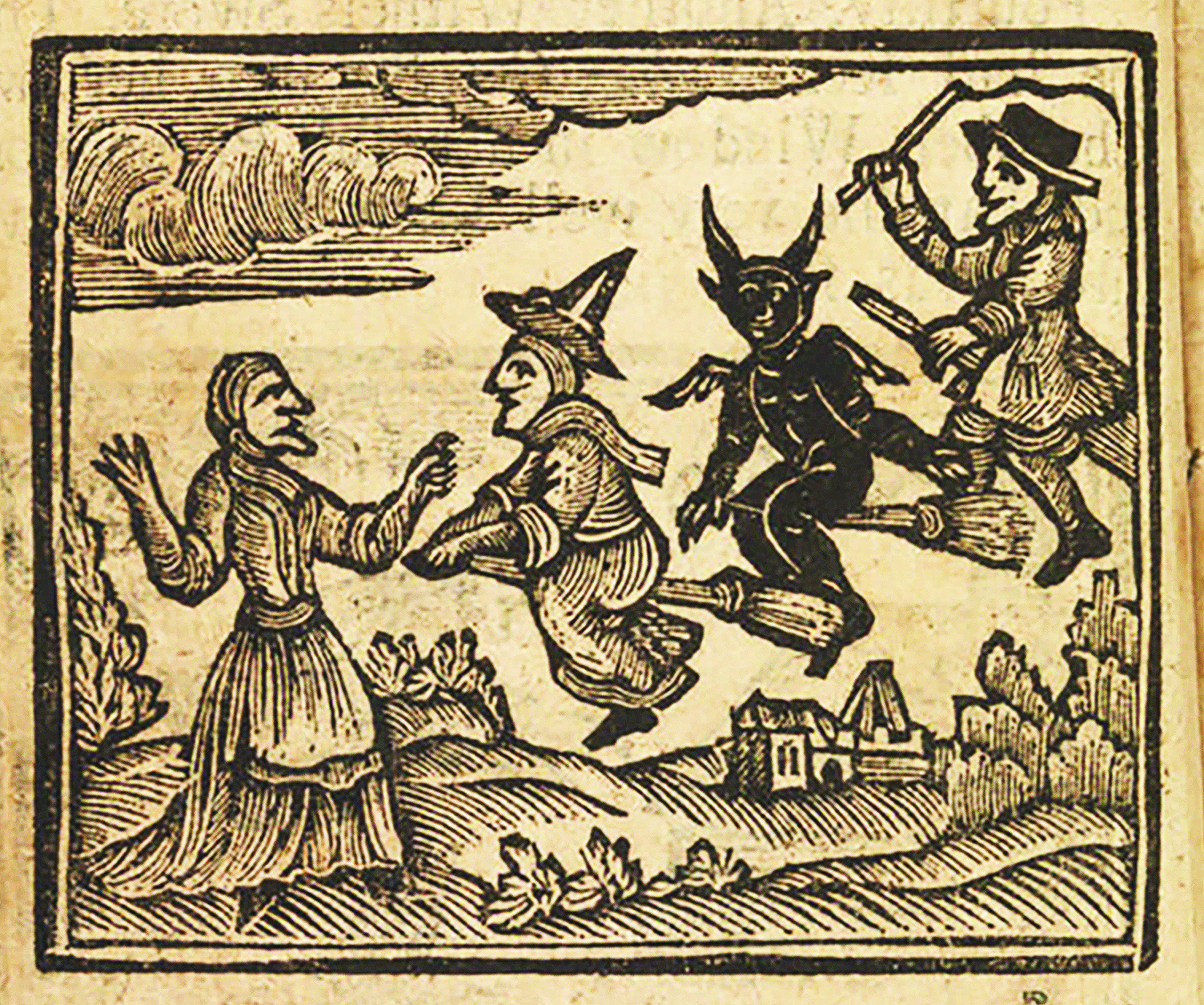
The Springfield Museums travels back to a time when accused witches walked among us in Witch Panic! Massachusetts Before Salem, on view May 17 through November 2 at the Lyman and Merrie Wood Museum of Springfield History. Forty years before the infamous trials in Salem, fear gripped the small settlement of Springfield, culminating in the arrest and prosecution of a married couple. The exhibition explores how the first instance witchcraft hysteria in the American colonies influenced the early history of the city and how the conversation continues today.
Located 100 miles west of Boston and separated from other communities by the Connecticut River, early Springfield stood on the edge of the wilderness – a place where fear and uncertainty could easily take hold. In 1651, talk of mysterious sickness, eerie visions, and unexplainable events led residents to accuse Mary Lewis Parsons and Hugh Parsons, who lived on the south end of Main Street and already had a reputation for “strange behavior,” of witchcraft and murder.
“Witches are an extraordinary historical conundrum, and in the Parsons’ story we can explore the truths behind the myths,” says Elizabeth Kapp, Curator of History. “The Europeans living in 1650s Springfield were trying to define themselves, but neighbors discovered it easier to uncover those who did not fit in.”
What is a Witch?
When visitors enter the first-floor gallery, they will be immersed in the cultural and historical connections to witchcraft. Multiple interactive stations introduce life in 1650s Springfield, from the home, farm, and church, to what the colonists ate, wore, and did for work. Learn how ordinary objects, such as cauldrons and broomsticks, became symbols of witchcraft, their everyday presence twisted into evidence of the supernatural. Visitors can also assemble puzzles representing “familiars,” supernatural helpers thought to assist witches in their evil deeds.
The stations also explore how time has transformed the witch from an outsider to be feared to a source of wonder and fascination through popular culture. Young visitors can don a cloak and hat and pose in front of a “magic mirror,” and vote for their favorite witch from a variety of media, including Wicked Witch of the West and Sabrina the Teenage Witch.
The Case Against the Parsons
On the second floor, visitors are introduced to the unique circumstances that produced the first witch panic in an American colony. Under the leadership of its founder William Pynchon, Springfield had steadily grown, and by 1651 was facing mounting challenges. Pynchon and Minister George Moxon were supposed to offer guidance during uncertain times, but they were dealing with their own problems. Moxon’s daughters had fallen ill with a mysterious sickness, creating speculation among the townspeople. Pynchon faced accusations of heresy for his controversial religious publication, The Meritorious Price of Our Redemption. With their leaders preoccupied and their fears deepening, the people of Springfield found the reason for their misfortunes in their neighbors Hugh and Mary Parsons.
Taking the perspective of a 1650s colonist, visitors are invited to serve as a member of the grand jury and determine the Parsons’ fate. After studying the witness testimony and reviewing the real evidence collected by the townspeople over several years – ranging from missing items and spoiled milk to apparitions and visions to sudden illness and death – they will be asked to answer the ultimate question: Guilty, or Not Guilty?
The exhibition also features objects from the Museums’ permanent collection, including one of the last remaining copies of Pynchon’s The Meritorious Price of Our Redemption, one of the first books to be banned in English North America. The Museums’ copy has the distinction of being owned by Cotton Mather, the prominent Puritan clergyman who influenced and recorded the witch trials in Salem (1692-1693).
Related Exhibition & Program
Yōkai: Japanese Ghosts, Demons and Monsters
On view May 17–July 20, 2025
Showcasing a stunning collection of Japanese woodblock prints and decorative arts from the permanent collection, this exhibition features the diverse forms and stories of supernatural entities known as yōkai. From vengeful ghosts to enigmatic sea monsters, these fascinating tales have been retold for centuries and have attracted renewed interest through contemporary media, including games, anime, and movies like Pokémon, Howl’s Moving Castle, and The Grudge. Discover why the stories of yōkai continue to inspire new generations to explore these captivating narratives. Japanese prints are rarely shown due to their delicate and light-sensitive nature, making this a rare opportunity to view the works in person.
Meet the Parsons: Witchcraft in Early Springfield
Thursday, June 26, 12:15 pm
Curator of History Elizabeth Kapp explores the world of witchcraft in early Springfield and the stories featured in the exhibit. Presented in person and virtually via ZOOM. Members free; nonmembers $4. In person tickets available at the Welcome Center; advance virtual registration at SpringfieldMuseums.org/programs.
Witch Panic! is sponsored by New England Public Media and St. Germain Investment Management; and supported by Springfield Cultural Council and Mass Cultural Council.
MassMutual is the season supporter of the Springfield Museums.