The Starry Scoop: August 2023
Read your monthly astronomy news with “The Starry Scoop” by Kaitlynn Goulette! Follow them on Facebook to have their updates placed directly on your feed!
Editor: Kaitlynn Goulette
August 2023, Edition 41
WHAT’S UP
This month, we are treated to the Sagittarius region as the constellation reaches its highest point in the southern sky. Astronomers have found that our Milky Way is a typical spiral galaxy, and the Sagittarius region is where the galactic center is located. This area is the “downtown district” of our galaxy, home to many deep-sky celestial treasures. The edge-on view of the Milky Way spans the entire sky, stretching from the Sagittarius region, through Cygnus, and continuing to Cassiopeia in the north.
Saturn appears over the eastern horizon following sunset this month, offering great views throughout the entire night. It reaches opposition on the 27th, which is when the planet is positioned directly opposite the sun with respect to Earth. A backyard telescope reveals its beautiful rings and a handful of its moons, including its largest, Titan. Jupiter rises around midnight all month long and is a wonderful target in the morning hours for early risers. Its detailed features and atmospheric bands, along with the four Galilean moons, are never disappointing observations.
The famed Perseid meteor shower peaks this month on the evening of the 12th into the morning of the 13th. Annually, it runs from July 17th to August 24th. At its peak, the shower produces up to 100 meteors per hour. The crescent moon will be in the sky but shouldn’t impede the show very much. For best viewing, find yourself in a dark location after midnight.
August 25th marks 20 years since the Spitzer Space Telescope was launched. It was the fourth and final mission of NASA’s Great Observatory Program, which included the Hubble Space Telescope, Chandra X-Ray Observatory, and Compton Gamma-Ray Observatory. Spitzer, unlike any spacecraft before it, utilized an Earth-trailing orbit and studied infrared radiation with its Cryogenic Telescope Assembly. Spitzer retired on January 30th, 2020, after more than 16 years of operation.
AUGUST’S SKY
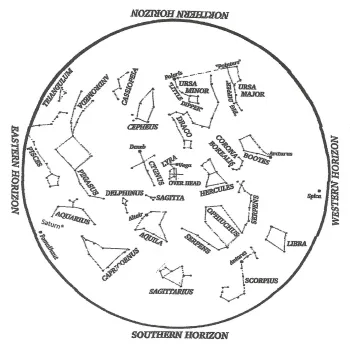
Hold star map above your head and align with compass points.
1: Full Moon, Supermoon
10: Mercury at Greatest Eastern Elongation
12-13: Perseid Meteor Shower Peak
16: New Moon
27: Saturn at Opposition
31: Full Moon, Supermoon, Blue Moon
OBSERVATIONS
The rainy weather has made it difficult to observe recently, but while on vacation at the beach I was able to stargaze under less light-polluted skies than at home. I didn’t bring any telescopes due to the salt and sand, but a pair of binoculars was my weapon of choice. The southern view was over the ocean with minimal light pollution, and I had fun sharing the binoculars with my family and friends.
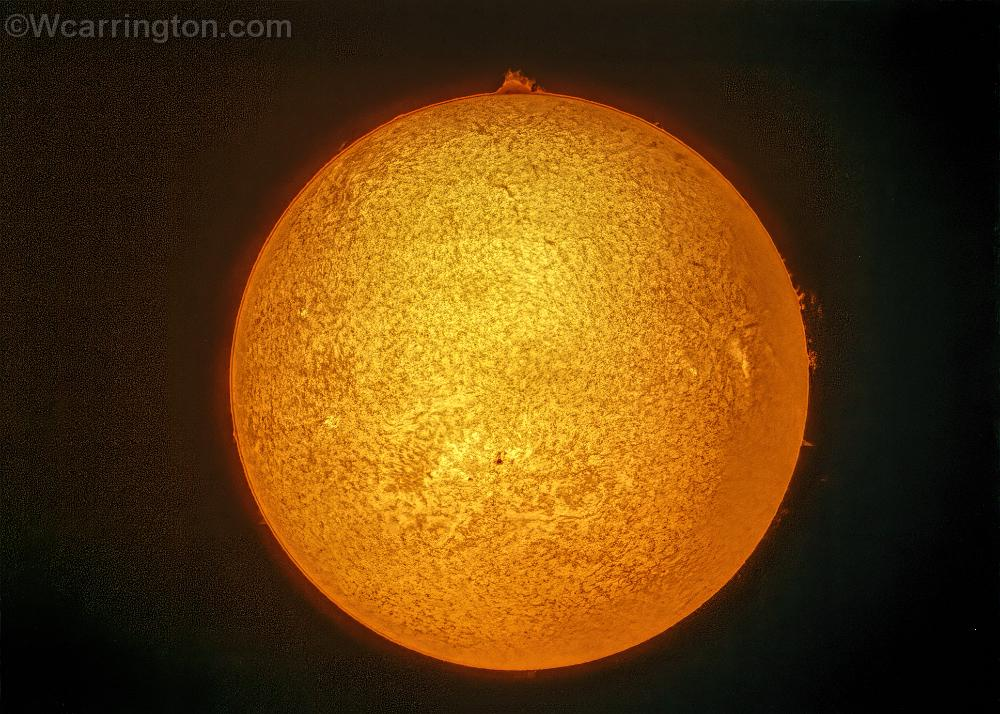
Lately, even on the partly cloudy nights, I’ve found enthusiasm to observe from fellow astronomers Richard Sanderson and Warren Carrington, who have been consistently stargazing and sharing their observations. After the sun goes down, Richard Sanderson, President of the Springfield STARS Club, enjoys views of the moon on rare clear nights. Along with spending time under the night sky, Warren Carrington has also taken his solar imaging to the next level. Much of their great work can be found on the STARS Club-Massachusetts Facebook Page. Warren showcases his photography on his website wcarrington.com, which I recommend visiting.
Inspired by Richard and Warren, I put my new 8-inch Schmidt-Cassegrain telescope to use. The persistent cloudiness limited me primarily to viewing the moon, but I enjoyed both observing and imaging some of my favorite lunar targets, including the Clavius and Gassendi regions. In the coming weeks, I want to focus on planetary imaging and capture Saturn and Jupiter in the early morning hours before school is back in session.
OBJECT OF THE MONTH
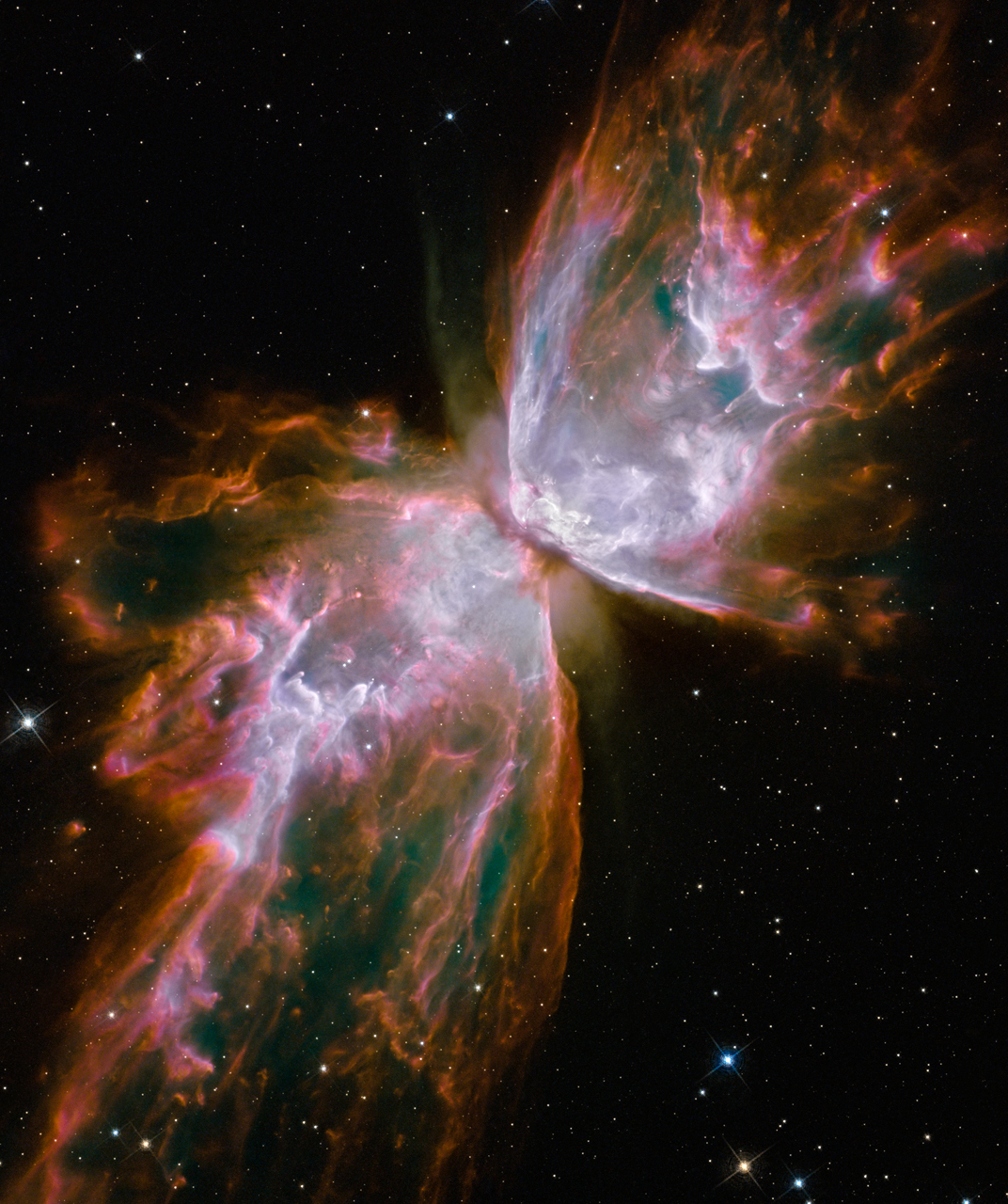
The featured object for the month of August is the Butterfly Nebula, designated NGC 6302. This nebula has one of the most complicated structures studied by astronomers. The central star’s outflow forms an hourglass appearance, in contrast to typical ring-shaped planetary nebulae. Dust clouds prevent astronomers from observing the central star directly, but it can be detected by the ultraviolet radiation it emits.
At about 4,000 light-years away, the entire nebula spans over 3 light-years. It’s located in the constellation Scorpius, four degrees west of the star Shaula, the scorpion’s “stinger.”
The purpose of the Starry Scoop is to communicate current astronomy and space events. If you want to share your observations or get digital copies of the Starry Scoop, contact starryscoop@gmail.com. The Starry Scoop is now on Facebook. Clear skies!
Featured Image by Warren Carrington

Related Posts